
Rocket League and the first teaser of Unreal Engine 6: what we know
Epic Games has chosen an unexpected, or at least curious, path to publicly present Unreal Engine 6.
During the Rocket League Paris Major, the company showed a trailer titled “A New Era” in which the famous racing game appears to be running on the new engine.
This is the first official content showing Unreal Engine 6 in action.
The video shows cars with more detailed models, more advanced lighting and a general level of graphic fidelity higher than the current version.
Why Rocket League?
Many expected Fortnite to be the title chosen to debut with the new engine, given its strategic importance for Epic.
Instead, the company opted for Rocket League, a game it has owned since 2019 (the year it acquired Psyonix).
This choice could be based on several points of view:
Rocket League still has a very active community and a consolidated esports following.
Being a game with relatively “simple” mechanics (car physics, closed arenas), it allows it to showcase graphical and technical improvements without the complexity of a huge battle royale like Fortnite.
It represents a good visible testing ground for external developers.
Is this a new chapter or an upgrade?
At the moment it is unclear whether Epic is preparing a real Rocket League 2 or if it is a major technical update of the current game.
The term “A New Era” suggests a significant evolution, but no new content or a release date have been announced yet.
What is certain is that Rocket League will become one of the first titles (if not the first) to officially switch to Unreal Engine 6.
What this means for players and the industry
For players, this should translate into a more visually beautiful version, with better lighting, finer details, and potentially improved performance, especially on new consoles and high-end PCs.
What this means for developers
For developers, this is an exciting sign, albeit one with some limitations.
Epic is demonstrating that Unreal Engine 6 can be applied not only to new and ambitious productions, but also to update and modernize an existing, successful game like Rocket League.
This could help studios that already use Unreal Engine: it could mean more manageable and less risky, allowing for improved graphics, lighting, and performance without having to rebuild the game from scratch.
For studios that use Unity, the situation is different.
Switching from Unity to Unreal Engine remains a major and costly decision (both in terms of time and money), which is unlikely to be made just to update the graphics of an existing game.
Many teams will evaluate UE6 especially for new projects, where they can take advantage of the new features right from the start.
Conclusions
Overall, the debut of Unreal Engine 6 with Rocket League is positive news for those who follow both the game and Epic's technological evolution. It's not yet clear when the new engine will be widely implemented, but this teaser officially marks the start of the transition.
The unveiling of the new logo underscores Epic's intention to make UE6 a versatile technology, useful for both large-scale productions and for modernizing established titles.
Latest posts
Free FAB resources - until 20 October 2026
New assets available for free on FAB, available until October 20, 2026
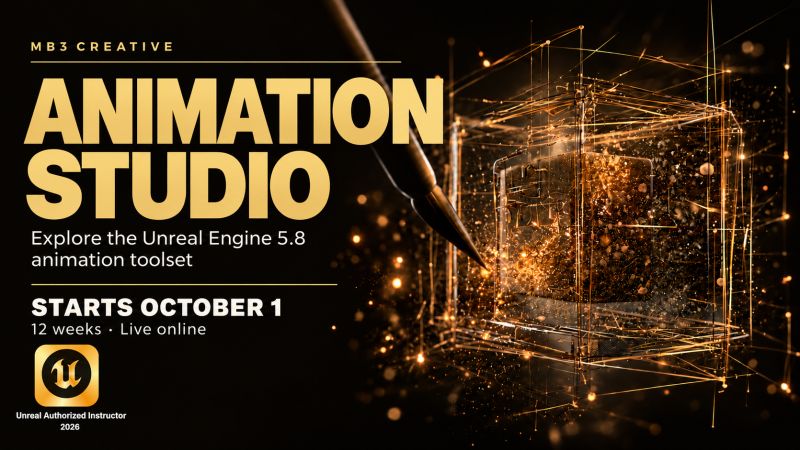
Unreal Engine Animation Studio: The basics of motion in UE 5.8
Unreal Engine Animation Studio: 12 weeks to master UE 5.8 animation tools and bring intention to movement.

MetaHuman Creator Web App: Closing November 5, 2026
Epic Games chiude l’app web di MetaHuman Creator il 5 novembre 2026. Dopo restano 90 giorni per recuperare i personaggi. Le funzionalità restano in Unreal Engine 5.6+. Esporta ora via Quixel Bridge.