Houdini Portal of Dunes Project
Introduction
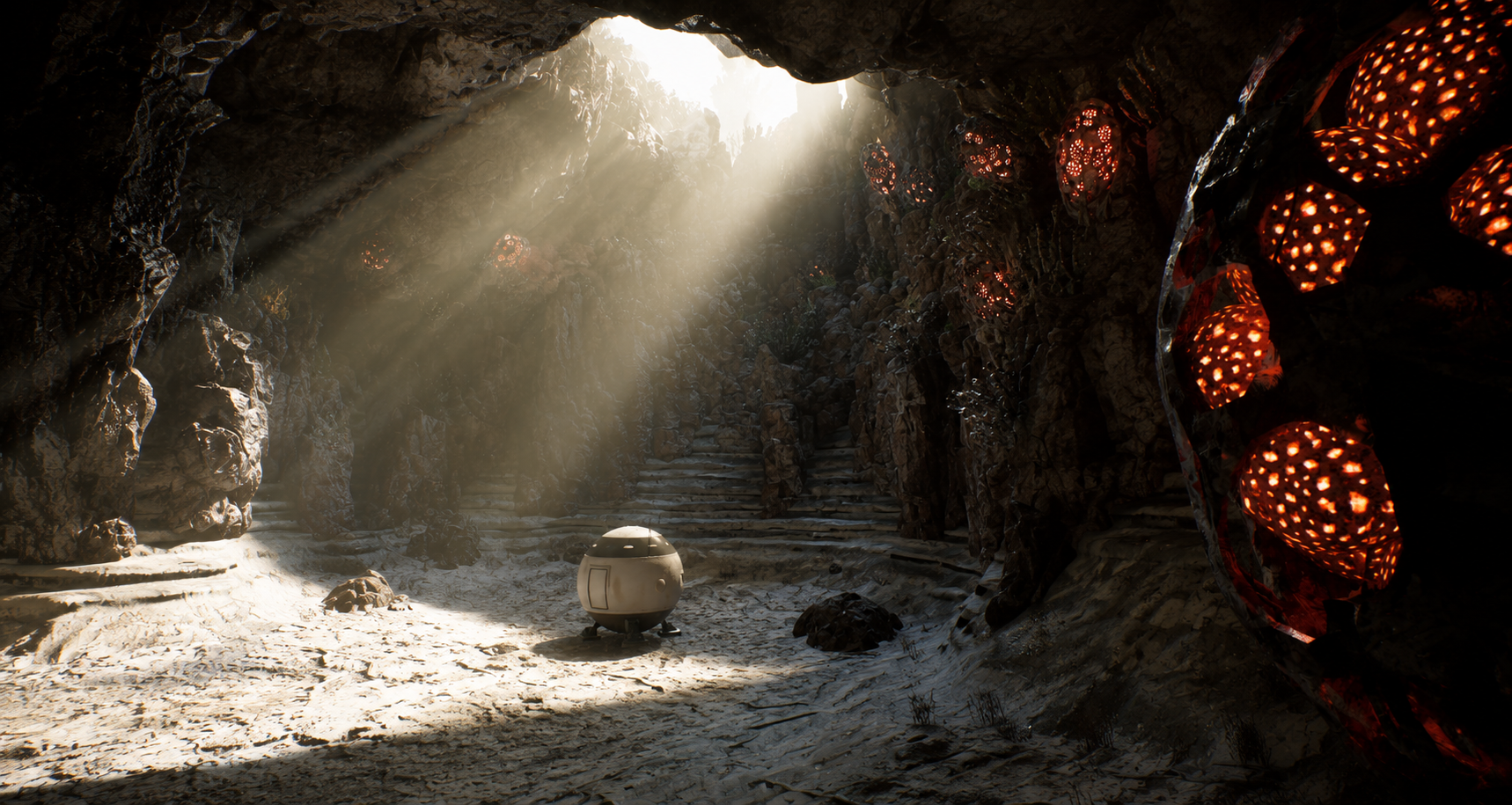
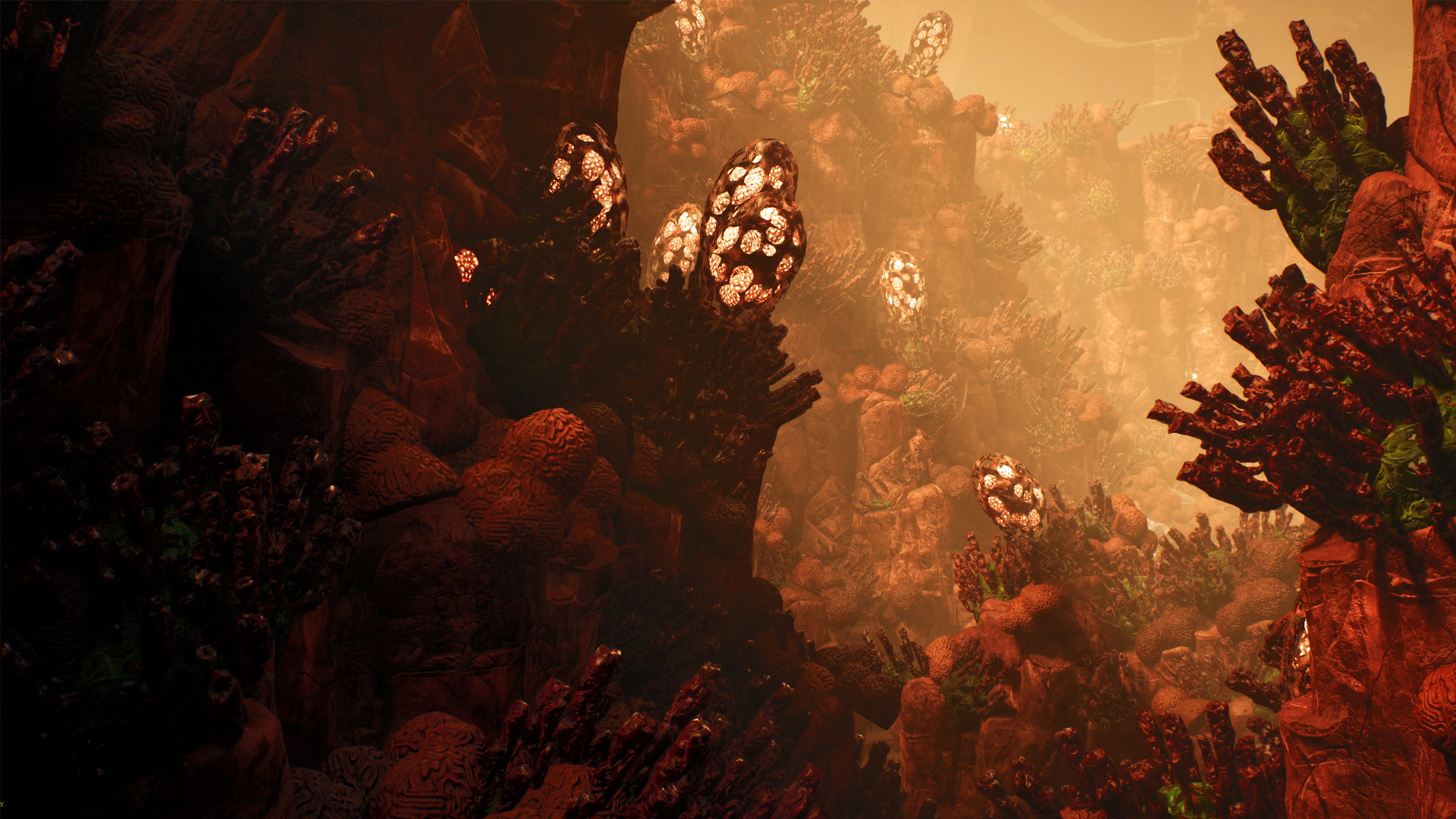
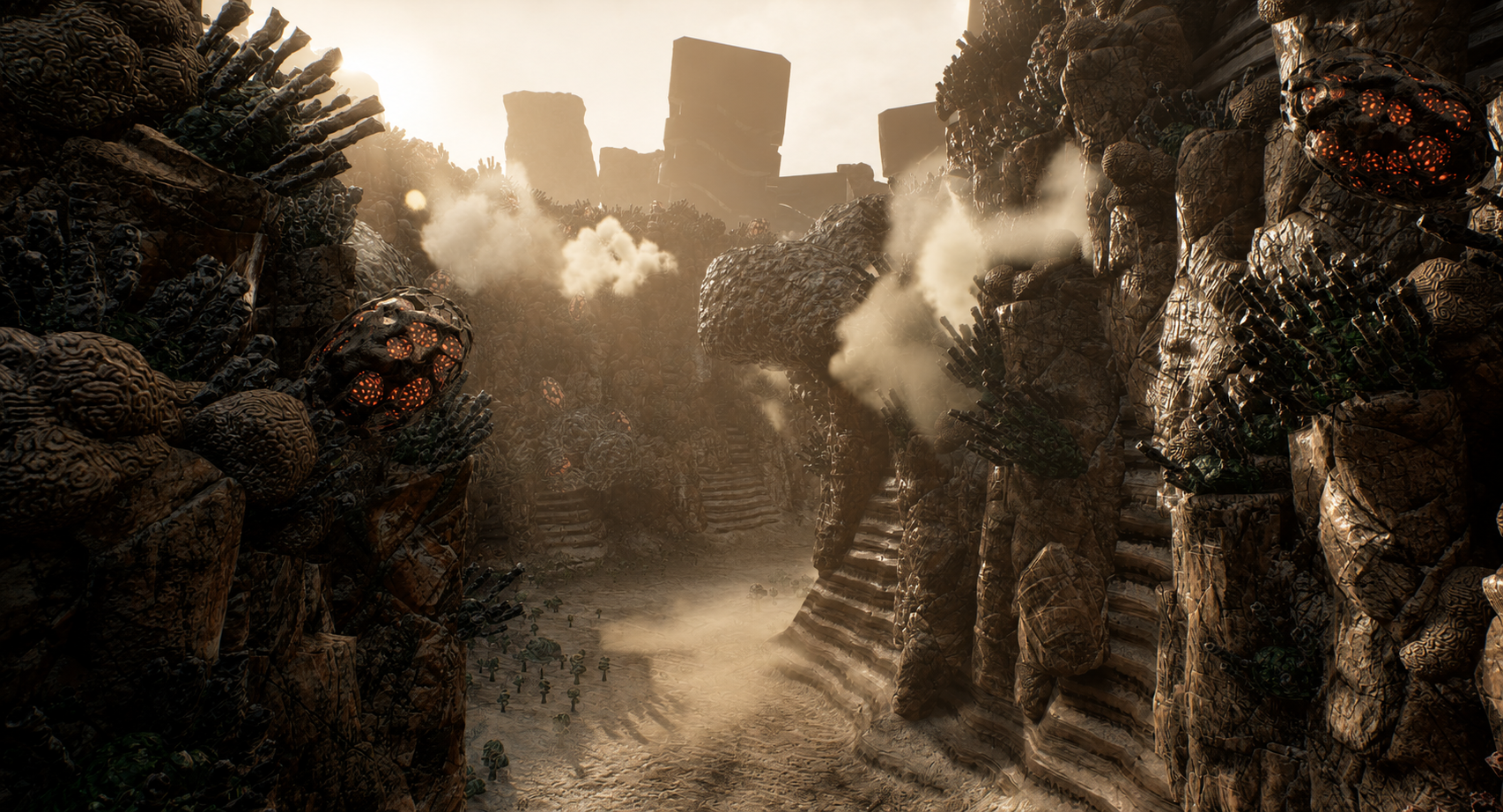
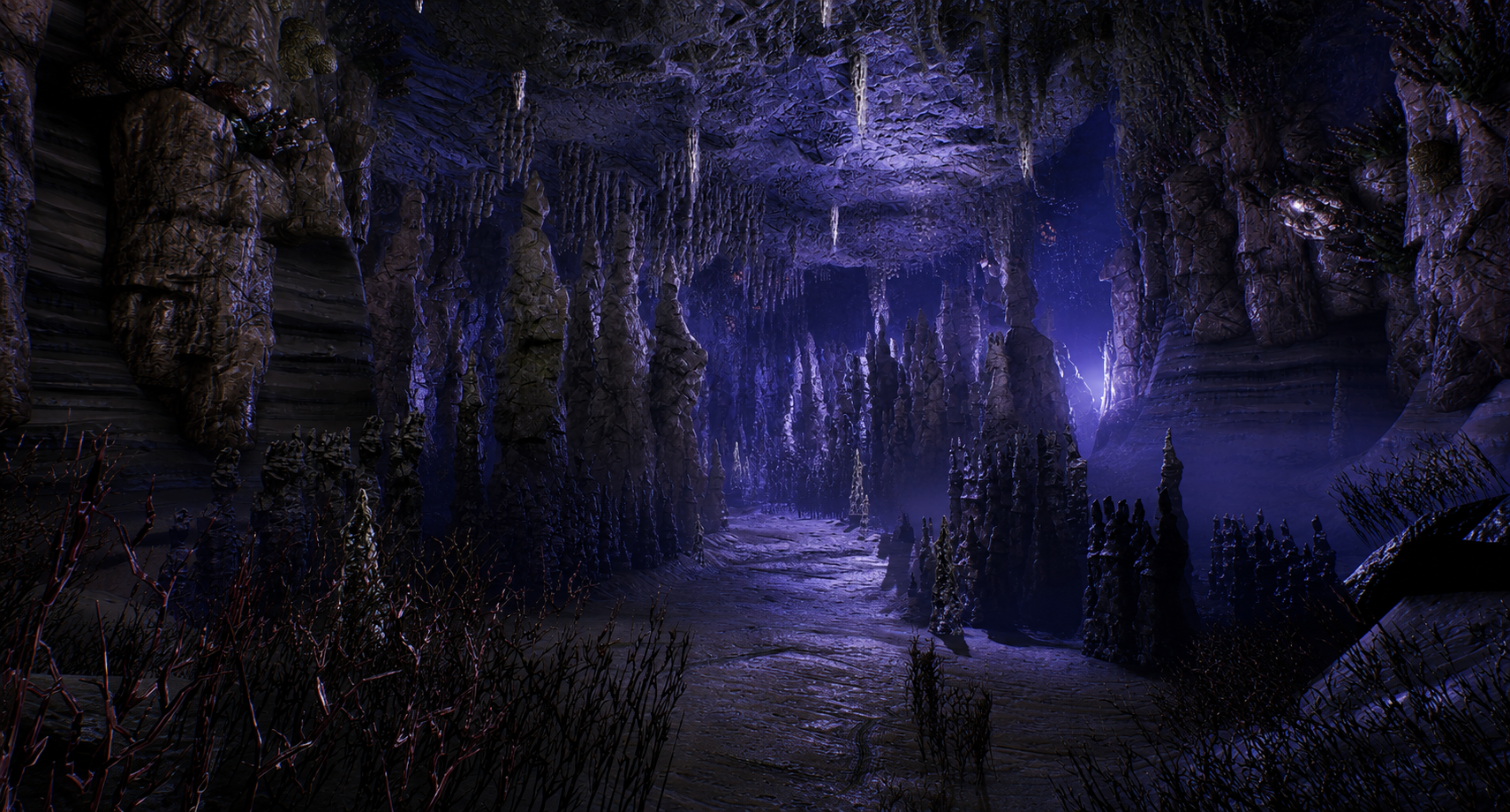
The project aimed to create an immersive 3D environment set in a canyon on an alien world, developed through an integrated pipeline between Houdini and Unreal Engine.
The activity was carried out as a hands-on, collaborative experience, involving a group of interns guided through the production of procedural content, introductory FX simulations, and real-time development.
The project provided practical experience with a modern production pipeline, combining procedural generation tools, simulation, and real-time world building.
Objectives
The objective of the project was to introduce participants to procedural workflows for creating complex environments, while keeping the main focus on simplifying the learning process of Houdini and its operational logic.
For this reason, the entire pipeline was structured to make concepts of procedural modeling and parametric generation accessible.
In fact, all scene elements for the alien canyon were created directly by the interns using Houdini, allowing them to gain hands-on experience in asset construction and procedural network management.
Subsequently, the assets were integrated into Unreal Engine via HDAs (Houdini Digital Assets), allowing students to create variations, modify parameters, and generate new configurations directly within the real-time engine without having to manually rebuild the objects.
Through this approach, the interns were able to explore:
procedural geometry generation
terrain construction
the use of node-based workflows
parametric asset creation
non-destructive management of changes
integration between Houdini and Unreal Engine via HDAs
The methodology adopted allowed us to simulate a contemporary production pipeline, while maintaining an educational structure designed to facilitate the progressive learning of procedural tools.
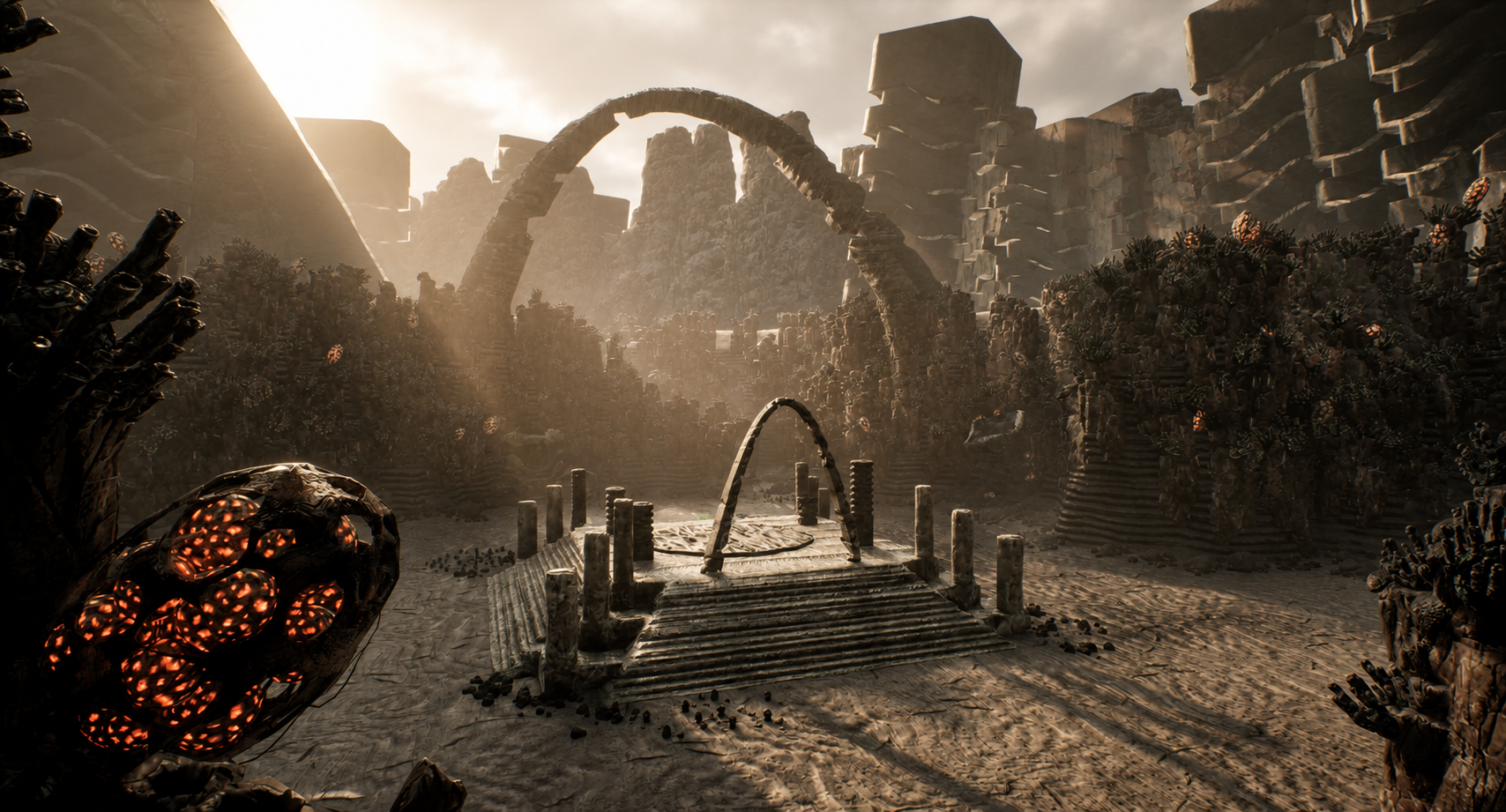
Team
Below are the roles and members of the team who collaborated in the development and implementation of the project.
Name | Role |
|---|---|
Aurora Colazingari | Student Intern - Houdini Artist |
Riccardo Pastore | Student Intern - Houdini Artist |
Francesco Orabona | Student Intern - Concept Artist |
Donatello Calciano | Student Intern - Programmer |
Giorgio Belvisi | Student Intern - Programmer and Procedural Artist |
Lorenzo Fontana | Student Intern - Environment Artist |
Matteo Frattini | Biunivoca Team - Project Manage |
Daniele Barone | Biunivoca Team - Supervisor |
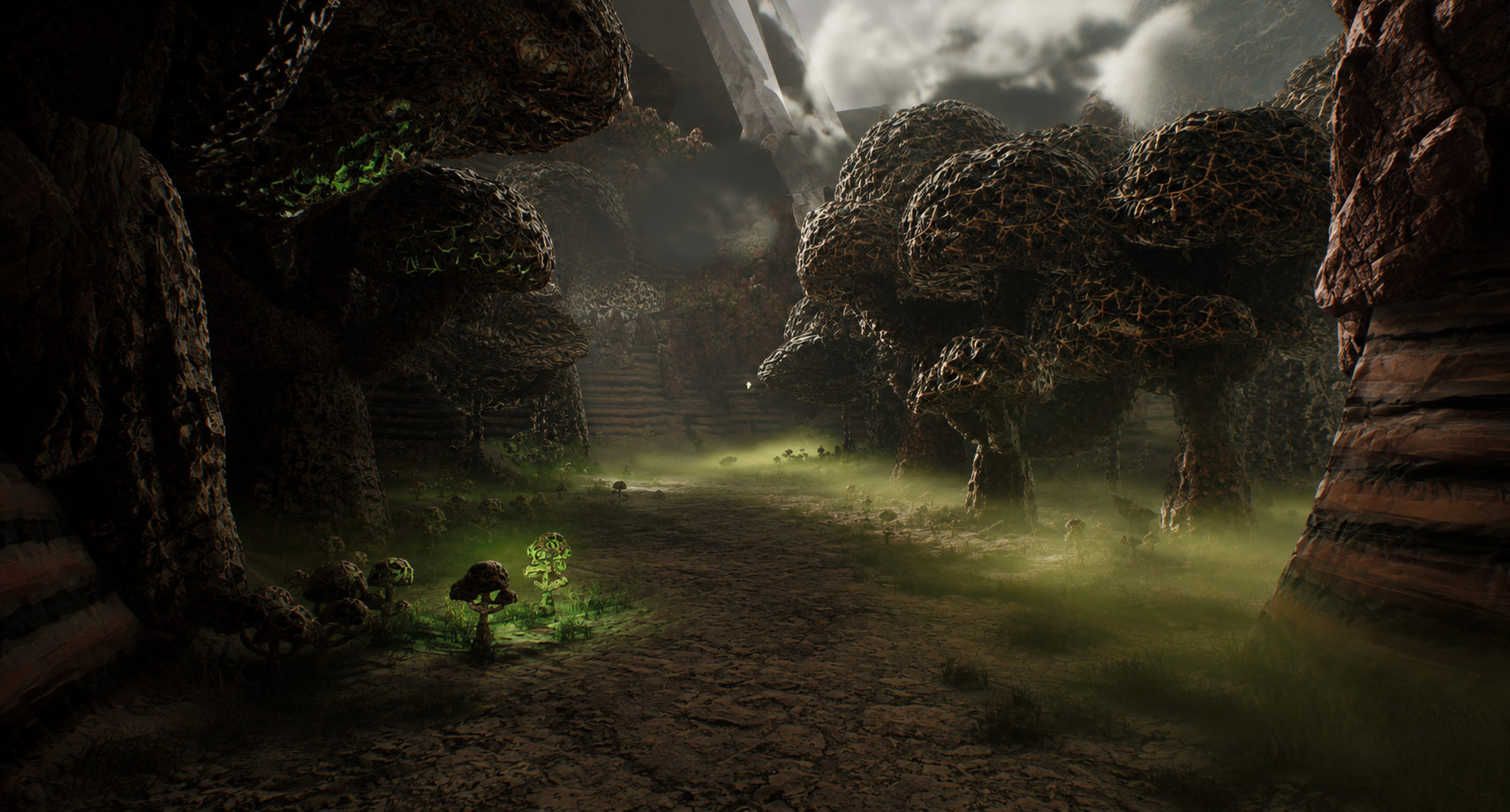
Process
The project was developed starting from a moodboard and a series of visual references gathered by concept artist Francesco Orabona, which were fundamental for defining the aesthetic identity of the alien canyon and guiding the overall asset production.
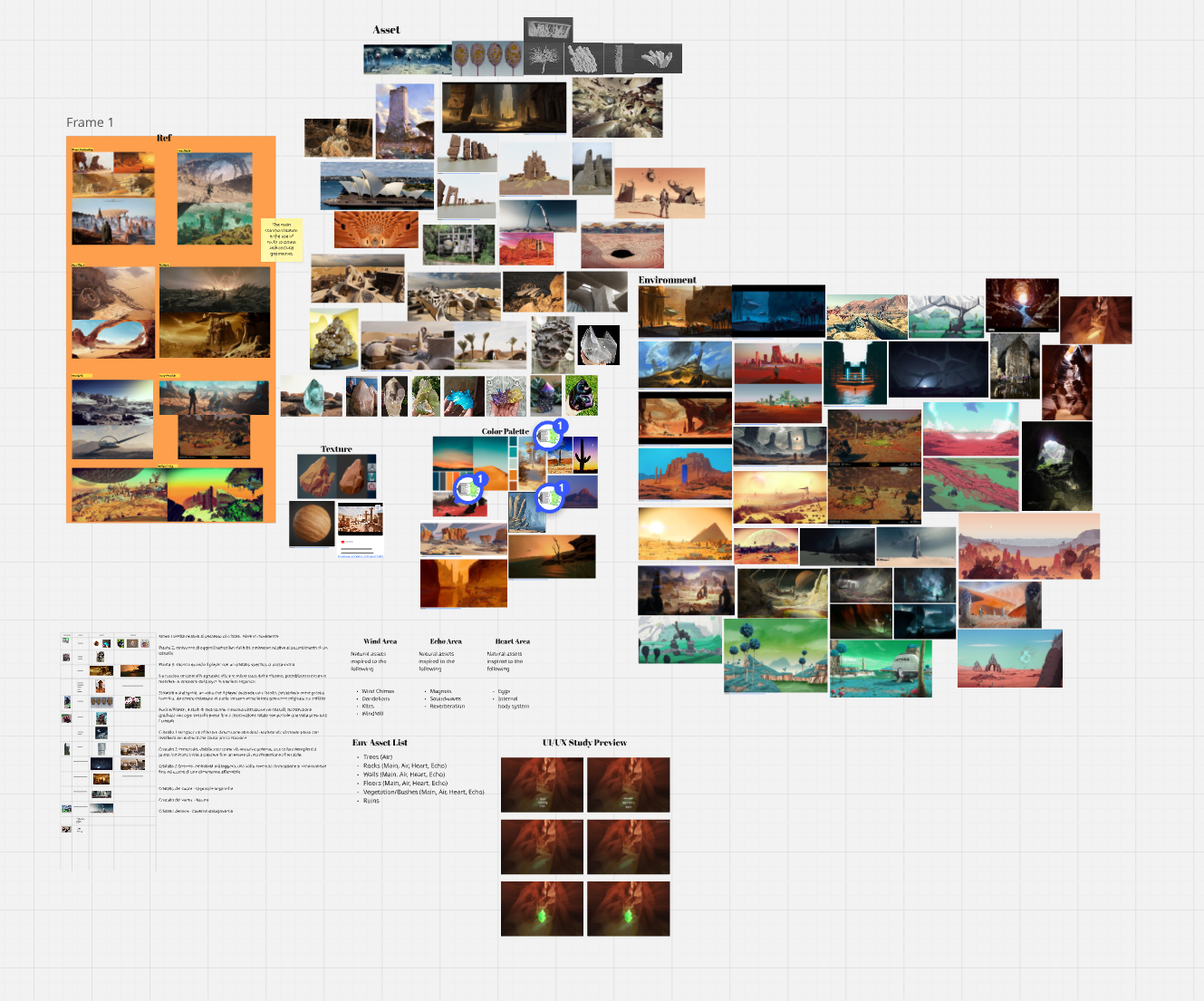
In addition to the visual research and art definition phase, Francesco was also responsible for creating the level blockout, used as the foundation for placing assets and establishing the overall scene composition within Unreal Engine.
This phase allowed for defining volumes, proportions, points of interest, and the distribution of environmental elements prior to finalizing the procedural environment.
The educational pipeline was structured through lectures held by Matteo Frattini, focused on the progressive learning of procedural modeling in Houdini.
Activities took place on a weekly basis, combining theoretical sessions with practical assignments, which were subsequently reviewed during weekly feedback and review meetings.
In the final production phase, the lesson schedule was intensified to daily sessions of about two hours, with the goal of finalizing the procedural assets developed by the interns and completing integration within Unreal Engine.
Moving on to the second phase of production—the in-engine environment build—procedural scattering systems based on PCG (Procedural Content Generation) were used.
Developed by Donatello Calciano and Giorgio Belvisi, these systems allowed for dynamically distributing environmental elements throughout the scene.
Logic and interaction components were implemented via Blueprints by Donatello Calciano and Giorgio Belvisi, integrating functionality and behaviors directly into Unreal Engine.
The work included both environmental interaction management and the development of more dynamic gameplay systems, ranging from the movement and manipulation of crystals within the scene to the creation of enemy in-game AI.
Through Blueprints, interactive behaviors, game logic, and control systems were implemented to make the environment not only visually credible, but also functional from an experiential standpoint.
Regarding lookdev, materials were developed by environment artist Lorenzo Fontana using a hybrid approach—combining Unreal Engine's traditional material paradigm with the new Substrate system to experiment with different workflows and achieve greater visual flexibility in the final scene output.
In addition to material development, Lorenzo handled the entire lighting and visual calibration phase of the environment, managing global illumination setup and balancing the scene based on the art references established during the concept phase. This work helped solidify the atmosphere of the alien canyon, maintaining aesthetic consistency between the moodboard, procedural assets, and final real-time rendering.
Matteo Frattini, Project Manager, managed the entire production and training process, from planning the procedural pipeline to finalizing the real-time environment. He supported interns throughout asset production, Houdini and Unreal Engine integration, procedural workflow management, and the coordination of team activities across all project phases.
Daniele Barone, Project Supervisor, coordinated the various stages of development, managing technical, organizational, and educational aspects while guiding the team toward the desired objective.
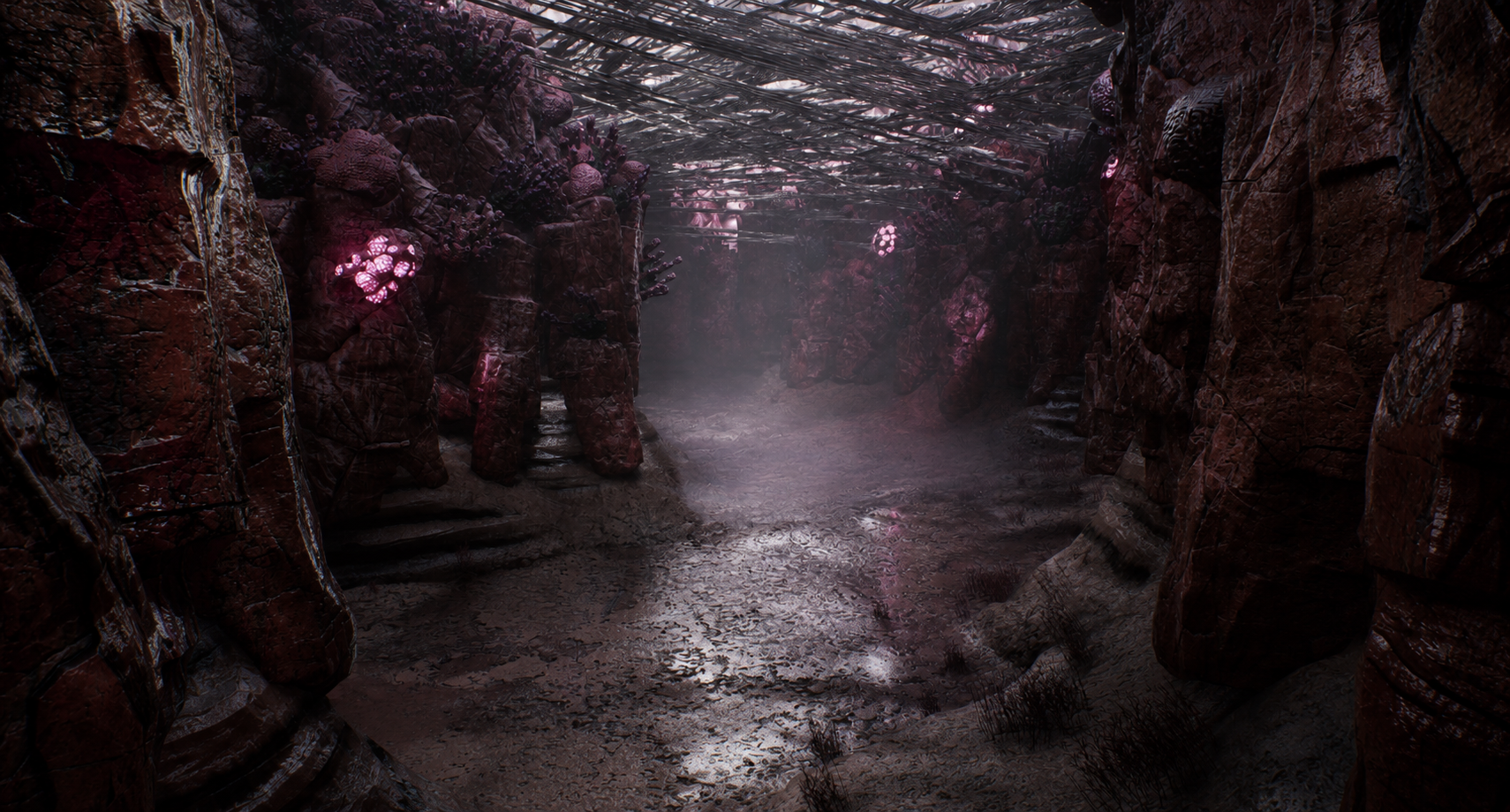
Technical difficulties encountered in the project
During the development of the project, several technical challenges emerged, primarily related to the procedural nature of the pipeline, the integration between different tools, and the management of a collaborative workflow in an educational setting.
1. Integration between Houdini and Unreal Engine
One of the main difficulties involved the integration between Houdini and Unreal Engine, particularly when using Houdini Digital Assets (HDAs).
The most recurring issues were tied to the proper management of parameters exposed in the assets and the synchronization between changes made in Houdini and their corresponding updates within Unreal Engine, which in some cases required additional iterations to ensure consistency and stability.
2. Real-Time Performance and Optimization
Building a complex environment like an alien canyon highlighted critical issues related to real-time performance. The high polygon count generated procedurally required special attention during scene optimization.ù
Additionally, asset scattering and the integration of imported simulations had a direct impact on the frame rate, making it necessary to balance visual quality and performance—also through the use of technologies such as Nanite or external systems like Zibra AI.
3. Complex Materials and Shading
Material development in Unreal Engine required an experimental approach based on a hybrid system between traditional materials and Substrate.
This led to difficulties related to potential visual inconsistencies between different assets, complex shader management and debugging, as well as performance issues when using particularly complex materials.
4. Coordination and Educational Workflow
Since the project was developed with the support of interns, challenges also arose regarding group coordination and workflow standardization.
Skill level differences among participants required continuous alignment efforts, both in defining pipelines and managing weekly reviews. In some cases, this led to additional iterations to guarantee consistency across assets produced by different team members.
Tools Created
During the project, several procedural tools were developed in Houdini, with the objective of building a libr
ary of modular, reusable assets that could be integrated into Unreal Engine via HDAs.
The tools created included:
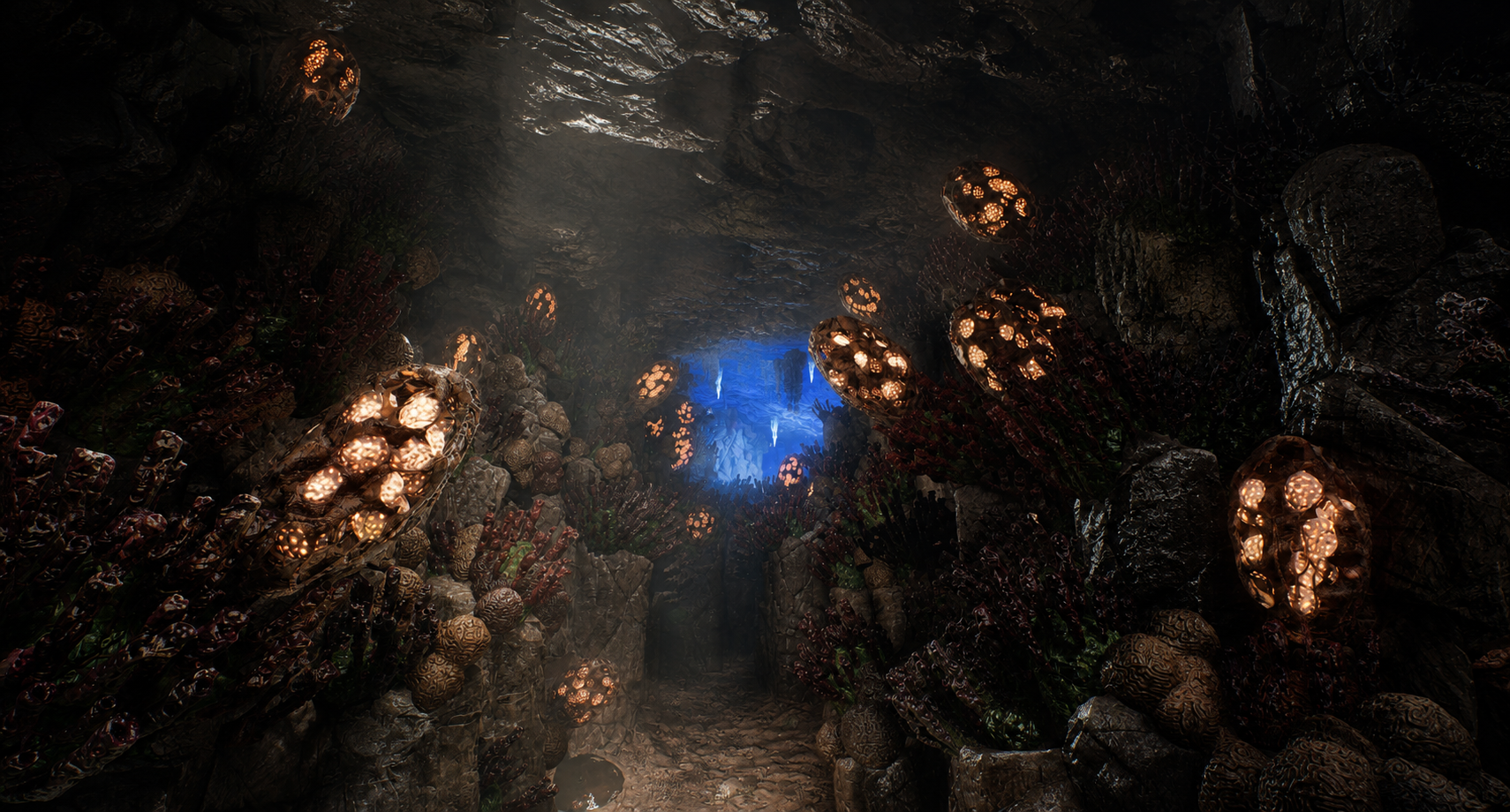
procedural systems for generating alien vegetation, including mushrooms, plants, and various types of flora
parametric generators for rocks and rock formations
tools for creating the canyon landscape and terrain
procedural crystal generators used within the scene
a “Ruinify” system for parametrically creating ruins and deteriorated structures
volumetric clouds
In addition, several FX simulations were developed, including:
an RBD (Rigid Body Dynamics) simulation for the destroyed bridge in the second area
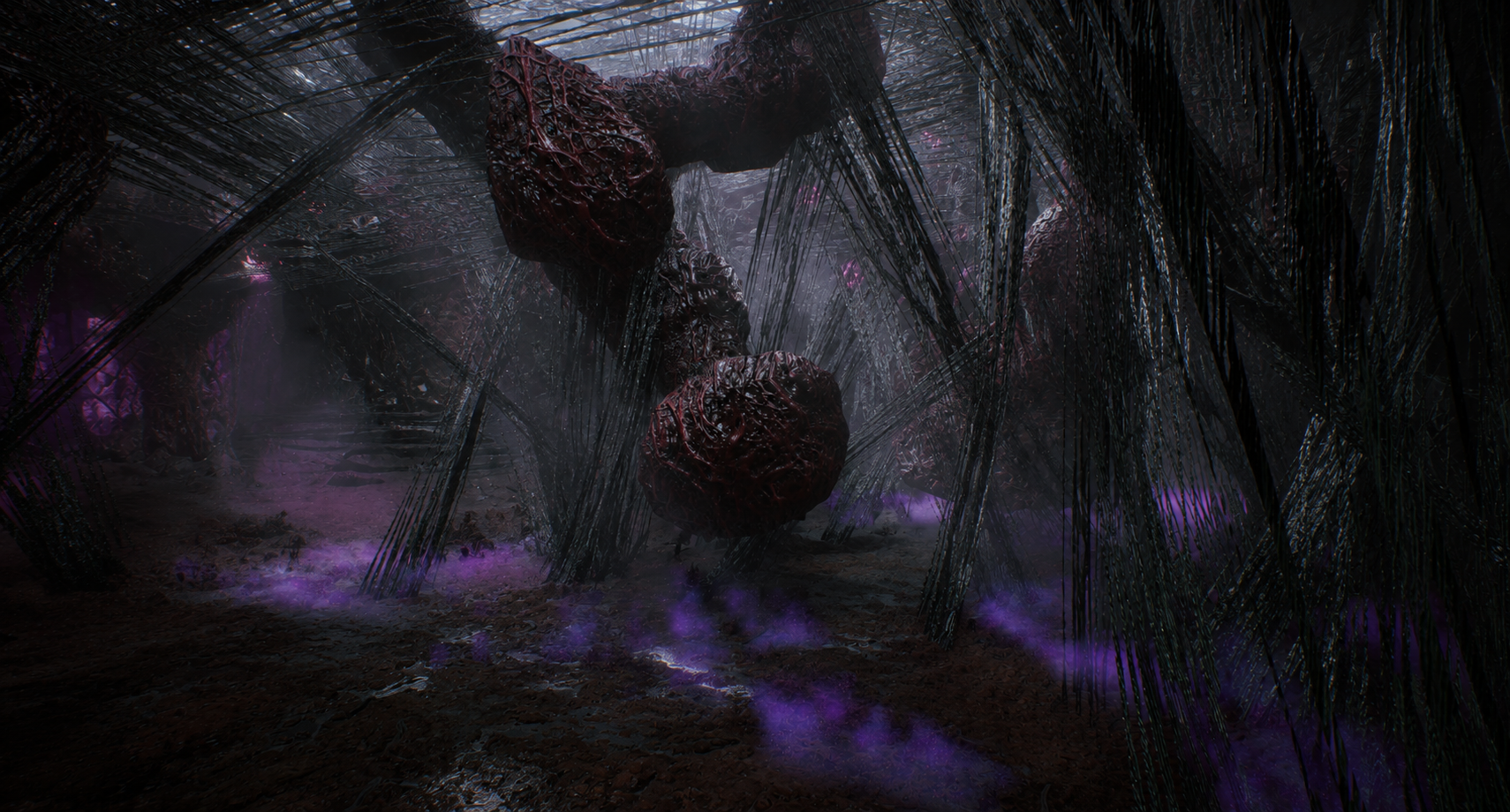
a Vellum simulation for the spiderwebs granting access to the first area
a Pyro simulation used to create the portal in the scene
Finally, PCG (Procedural Content Generation) systems were used within Unreal Engine for procedural scattering and populating the scene with the assets created by the interns, enabling a parametric, dynamic distribution of environmental elements directly in-engine.
Conclusion
The project served as an educational and production-oriented experience focused on the use of contemporary procedural pipelines to create real-time environments.
Through the integration between Houdini and Unreal Engine, participants were able to gain experience with workflows used in professional production, developing technical skills related to procedural modeling, FX simulations, PCG, lookdev, and in-engine integration.
Beyond the technical aspects, the project highlighted the importance of collaboration, pipeline management, and work organization within a multidisciplinary team.
The final result was the creation of an educational framework capable of introducing interns to practical, contemporary production methodologies.
Interviews and Showcase of Interns’ Projects
Aurora Colazingari
Riccardo Pastore
Lorenzo Fontana
Giorgio Belvisi
Latest posts
Epic Games Launcher is renewed: more speed, Linux support and AI-assisted development
Epic Games presents the Preview of the new Epic Games Launcher, rebuilt to offer better performance, a more intuitive interface and Linux support.

MIA XR 2026: video games, intellectual property and new frontiers of entertainment
MIA XR 2026 explores the potential of intellectual properties across video games, audiovisual and immersive experiences, between innovation, storytelling and new business opportunities.

London Games Festival 2027: applications open for festival initiatives
London Games Festival 2027: applications open for showcases, funding, networking and events. Discover the opportunities and deadlines to participate!